Friday, January 22, 2010

Japanese Tea Ceremony

Contrary to what many people may believe but the practice of drinking tea it not native to Japan. Rather it was brought to the country in the 9th century by a Chinese monk. According to the legend tea had already been known to China for thousands of years before it was introduced to Japan. The practice of drinking tea became popular in Japan first for medical reasons and later simply for pleasure.


In China a writer named Lu Yu wrote a Treatise on Tea that described the proper preparation and cultivation of tea. He belonged to a religion that would later be known in Japan as Zen Buddhism. Many of his ideas would later be incorporated into Japan’s tea ceremony.

Tea as a matter of ceremony did not truly develop until the 12th century when a new type of tea was introduced called matcha. This tea was a powdered green tea which was produced from the same plant as black tea but it was unfermented. This tea became very popular in Buddhist temples throughout the 12th century and by the 13th century the samurai had begun preparing and drinking matcha. It is from these beginnings that the tea ceremony developed.

The meaning behind the tea ceremony can be different for many but perhaps one of the most well known meanings of the tea ceremony was laid out by Sen no Rikyu. He introduced the concept of ichi-go ichi-e which means one time, one meeting. The idea was the each meeting between people was something to be treasured because that meeting could never be recreated.

The tea ritual itself is very subdued by bound by tradition. There two schools the Omotesenke and Urasenke which have evolved and created their own rituals for the tea ceremony. The ceremony is so deliberate that even the washing of the utensils is done with prescribed movements and in front of the guests. The tea ceremony must be performed in a tea house, rather than a tea room and there is usually very little conversation to take place.

These ceremonies can last anywhere from 1 hour to 5 hours depending on the type of ceremony performed. The host of the ceremony will typically wear a kimono while the guests may choose to wear kimonos or other types of subdued formal wear. Since this ceremony is so steeped in history and tradition the objects used during the tea ceremony are often irreplaceable antiques that have been passed down for generations.


Top Blogs

Wednesday, January 20, 2010

Kimono

The Japanese kimono has become a very striking part of Japanese culture and one of the most popular aspects of Japanese culture. It is perhaps surprising that these traditional garments were influenced by traditional Han Chinese clothing. It was around the 8th century that Chinese garments began to gain popularity in Japan.


It was during the Heian period (794-1192) that the kimono became very stylized but was still featured with a half-apron over it. Then during the Muromachi age (1392-1573) that the kimono went through another transformation, the Kosode which was considered to be underwear began to be worn without the hakama over it.

Without the hakama (trousers, divided skirt)the kimono needed a way to remain closed, and so a belt or Obi was added. The final major change to the kimono came during the Edo period (1603-1867) when the sleeves grew in length, especially among unmarried women. The Obi also became much wider. After this period the design and shape of both male and female kimonos remained relatively the same.

The process of making the kimono is considered by many to be an artistic process with only the finest silks being used. Traditional kimono makers will sew the entire kimono by hand but even machine made kimonos have a significant amount of hand stitching.

There are both formal and informal types of kimonos. A formal kimono will have a free style design dyed over the surface of the kimono. An informal kimono will have a repeat pattern dyed or will be woven. In some cases the pattern on the kimono will also determine the season in which it is to be worn. For example a pattern that combines butterflies and cherry blossoms would be worn in Spring while watery themed designs are worn in summer.

A proper kimono is not cheap with a woman’s kimono costing more than $10,000 but a full kimono outfit could easily run more than $20,000. But this is not a price that the majority of Japanese will pay, rather there are kimono designs that are far less extravagant and much less expensive. There is even a booming market for second hand kimonos and machine crafted kimonos. Some people will even use patterns and create their own kimonos.


Top Blogs

Saturday, January 16, 2010

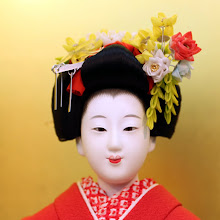
Japanese Maiko & Geisha

The Geisha are traditional entertainers in Japanese culture. Many parts of their profession are still shrouded in secrecy but they are not considered to be prostitutes. Their focus has always been upon learning the traditional Japanese arts and using their skills to impress wealthy men.

In the past Geisha girls (Called Maiko) would spend nearly their entire lives training for their future profession. Geisha houses would buy young girls from poor families and then take over the responsibility of caring for them and raising them. A geisha girl (Maiko) would then spend the rest of her training living within the Geisha house. She would pay for her education and board by eventually becoming an assistant to a senior Geisha and then becoming a Geisha herself. In order to become Geisha, Maiko had to learn many skills such as song, drum, and arts of gracious etiquette. Once viewed as full-fledged, Maiko was allowed to become Geisha.

Today it is to longer the practice to buy young girls but instead becoming a Geisha is entirely voluntary. Girls will typically enter Geisha training in their late teens. These women will learn the arts of poetry, music, dance and other forms of entertainment.

There is a belief among many non-Japanese that Geisha are akin to prostitution but this has never been the case. It has been known for some prostitutes to try and capitalize on the popularity of the Geisha, but a true Geisha will never involve herself in sexual relations with her clients. In the past it was common for a Geisha to take a “Danna” or patron who would pay for her costs of living. This patron could be a wealthy man, sometimes married who is able to take on the high costs of Geisha training. The Geisha may or may not have been in love with her patron but sexual intimacy between the two was never part of a financial agreement. But still today the truth about this relationship is unknown even among many Japanese.

The number of true Geisha in Japan has been gradually dwindling, in the 1920s there were tens of thousands of Geisha but today their numbers are less than 2000. A Geisha’s time can be measured in a number of different ways and one of the most traditional is for it to be measured in the amount of time it takes for an incense stick to burn.

Wednesday, January 13, 2010

Yoshitoku Doll Company


Yoshitoku was founded in 1711, Edo era, as Doll and Toy Wholesaler. The 6Th Edo Shogun gave the name “Yoshino-ya” (Shop name) with the first name “Tokubei”. The name “Yoshi-Toku” came from the combination of the shop name and the first name. The name “Tokubei” has been inherited to the next generation through its 300 year history.
Yoshitoku, first of the kind, with its tradition and the high quality of artistic craftsmanship, has dealt in Doll for girl, Miniature Armor & Helmet for boy (Yoroi / Kabuto), and other arts & crafts. Yoshitoku name is branded as it has delivered many art & crafts to Japanese Royal family at the princess and the prince birth. The tradition will be carried on to the next generation orever.


The picture is Yoshitoku 11th Tokubei presented a Ichimatsu doll to Princess Diana.

Battledore


Hanetsuki (battledore and shuttlecock) began in the 14th century. According to the pictures which depict Hanetsuki in the 1600's, the exorcism ceremony of New Year’s Day in the imperial court were drawn on the battledore. When the battledore started to bear paddled pictures of the figures of Kabuki actors in the latter part of the Edo period, it became much more gorgeous and became popular among commoners. The reason for displaying battledore and presenting a battledore to the newly born baby girl is to dispel ill sprits so that she will grow up healthy.

Hina Doll


From the ancient Japan, people transferred their misfortunes befallen them to dolls and exorcised them on March 3rd. The dolls are called “Hitogata” which is human figure made of paper or straw and used to be set adrift at sea or down a river. This custom was connected with “doll-house-play” among girls during the 8th century and developed into Hina Festival of today. Today, just as olden day households with young girls, we display Hina Dolls and celebrate Hina Festival to pray for their happiness on March 3rd.

Samurai Yoroi / Kabuto


At the beginning of Edo period Samurai families used to display Armor and Helmet to celebrate the birth of a boy while ordinary citizens used a hand-made helmet called Iris Helmet to decorate the gateway. In the later years of Edo period, this display was moved indoors and the armor was added to it. Its handcraft has become sophisticated and they are displayed on chest with the wish of the boy’s heath and prosperity.